
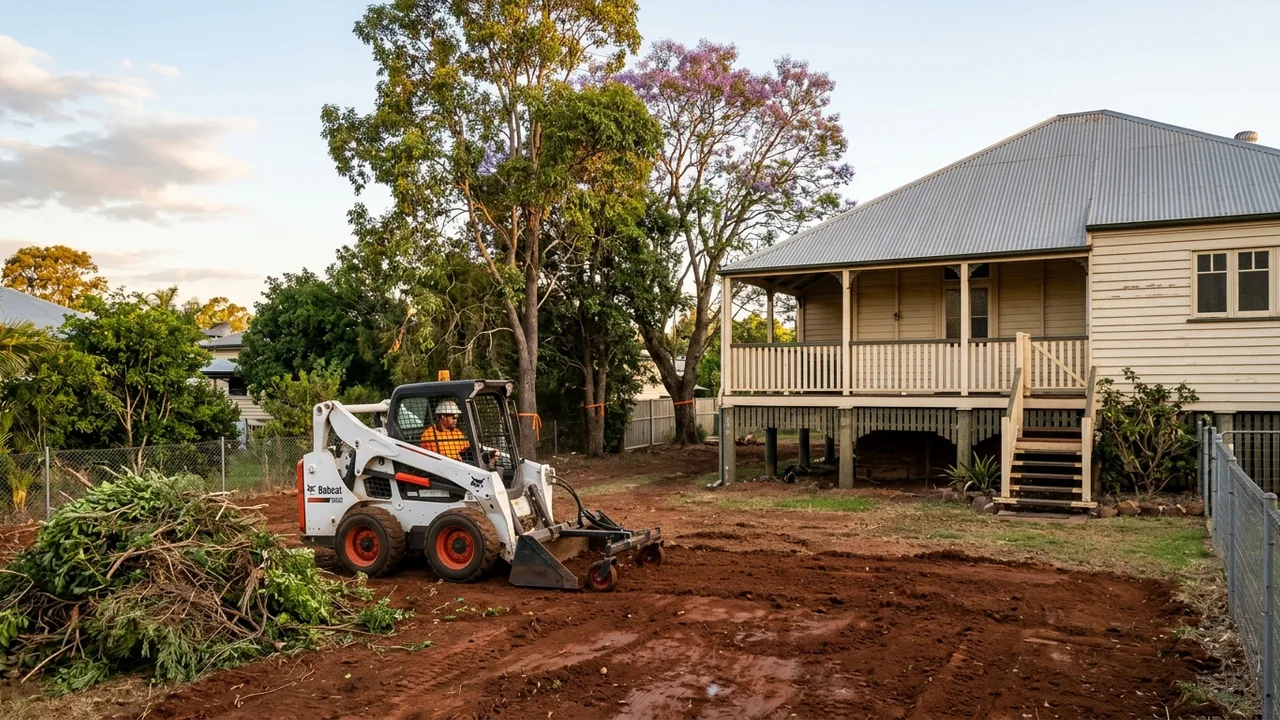
Land Clearing in Cranley, Toowoomba
Scrub, lantana and old stumps can take over a Cranley block fast. An independent contractor clears what needs to go, keeps the trees you want and agrees the price first.
Land clearing in Cranley starts with what has to go before a builder, a fence line or a firebreak can go in: scrub, regrowth and stumps. The contractor marks what stays, agrees the work area and puts a written price in your hands before a machine arrives.
Land clearing in Cranley: acreage, scrub and stumps
Cranley's mix of land shapes the work. On the newer estates up the hill, it is mostly a house pad and access track cleared so the builder can start. On the hectare blocks towards Gowrie Creek, it is more often a paddock gone to lantana and regrowth, plus a tidy-up where grass and scrub have crept up to the house and sheds.
On a larger block, the contractor usually works in stages. Heavy scrub and small trees come first, then stumps, then a final pass to rake the surface clean. A machine such as a mulcher chews brush into chips on the spot. An excavator or similar machine pulls stumps.
The price follows the size of the work area, how thick the growth is, and how many stumps come out.
How are the trees you want to keep protected?
The contractor can take out undergrowth and leave the big shade trees standing. It works when the trees are marked before the machine arrives.
A good operator walks the block with you and flags each tree to retain. Then a protection zone is agreed around each trunk and its roots. Machines stay outside that zone, because compacted or torn roots can kill a tree that looks untouched.
Windbreak lines and shade trees near the house are the ones worth naming first.
What happens to the green waste and stumps?
Green waste is either mulched on site or carted away. Mulch left on the ground suits a large block, because it suppresses new weeds and cuts haulage. Brush taken away suits a block where a lawn, driveway or build site needs bare, clean ground.
Stumps can be ground down below the surface, pulled out whole, or treated so they do not regrow. A stump in the path of a new fence or driveway usually has to come out. One far from any building can often be ground or treated instead.
The written quote is where all of this gets settled: the work area, the trees kept, mulch or cart-away, the stump method and the finish left behind.
Can a machine reach a sloping or soft block?
Usually yes, but the ground decides which machine and how fast it goes. Steeper pockets and soft, wet patches near the creek line need lighter or tracked equipment, and sometimes a different approach to staging the work.
Narrow gates and tight driveways matter too. If a large machine cannot get through, the contractor may float in a smaller one. How the ground falls, where the gate is and where it stays boggy after rain shape the plan far more than the acreage does.
Do you need approval to clear your Cranley block?
It depends on the Queensland vegetation mapping for your property. A development approval condition, a covenant or an offset on the title can remove an exemption you would otherwise have.
As the landowner, you are responsible for clearing lawfully. Your contractor can go through the current property mapping with you before work starts and flag where a council check, a notification or an approval may be needed, so nothing stalls halfway through. A firebreak around buildings has its own limits on width, and clearing for a different purpose cannot be added on to widen it.
Land clearing in Toowoomba: Gowrie Creek and the hospital grounds
Cranley sits on Toowoomba's north-western urban edge. It runs from suburban lots and newer hillside estates to hectare blocks and bushland, so two clearing jobs a few minutes apart can need completely different machines.
Small farms and widely spaced rural homes cover the bulk of Cranley. That means long fence lines, paddocks left to regrow and sheds sitting inside overgrown grass. Fuel reduction around those buildings is a common reason to call a contractor.
The northern and eastern edges of the suburb approximately follow Gowrie Creek, and Boundary Road is the western boundary. Blocks near the creek can be soft after rain, so the ground and the property mapping both deserve a look first. Blocks on the higher, sloping ground bring slope into the plan.
Whether the block is near Cranley railway station, the bushland, or the grounds around Baillie Henderson Hospital, the boundary matters. Next to bushland or a neighbour's fence, peg the boundary and the bush edge during the site walk, because a machine that crosses either is hard to undo.
Roughly how big the area is and which trees need to stay are the two details that shape the first quote.
Services in Cranley
- Stump grinding and removal Stump wood ground below the surface or roots removed so lawn, garden beds or a fence line can go in.
- Rural and farm land clearing Regrowth, timber and stumps cleared from agreed paddock acreage, firebreak strips and fence lines.
- Residential block clearing Trees, scrub, stumps and green waste cleared from house blocks and yards, with shade trees kept standing.
- Tree clearing and removal Unwanted trees felled and removed from blocks, acreage and backyards, with the timber and stumps dealt with.
- Site preparation for building Trees, scrub and stumps cleared from the house pad, shed site and access track before the builder starts.
- Selective clearing Undergrowth and chosen trees taken out while the established shade and windbreak trees stay standing.
- Forestry mulching Lantana, scrub and small trees shredded into mulch where they stand, with no burn piles left behind.
Frequently Asked Questions
Where can I find wetland mapping for the Cranley and Toowoomba area?
Get it priced
Overgrown block holding up your build? Tell us about the land and get the clearing moving.
Share the details and we will help you take the next step with confidence.