
Block Clearing in Toowoomba for House Blocks
Scrub, regrowth and stumps are holding up your build. A good clear takes them off the house site and leaves the shade trees you want to keep.
Block clearing in Toowoomba means taking trees, scrub, stumps and debris off the part of your land the builder or landscaper needs, and leaving the rest alone. It suits a freshly bought block gone to lantana, a back paddock of regrowth, or a yard where old stumps block the fence line. A good job ends with workable ground, a written price and a plan for every pile of green waste.
Block clearing in Toowoomba: getting a house site ready
A builder wants the house pad bare to the dirt before levelling, with no stumps or root balls left to rot under the slab. The access route and the yard areas come next.
Start with what the builder needs and work outwards. The pad comes first, then the driveway line, then any area for sheds, fencing or lawn. Clearing only those areas costs less than stripping the whole block and leaves your mature trees doing their job.
The areas affect each other. The driveway line decides where machines enter, which decides which trees can stay, and the waste plan decides whether mulch piles up on the pad or somewhere out of the way.
Stumps hidden inside thick scrub are easy to miss, so they belong inside the area being priced.
What stays and what goes on your block
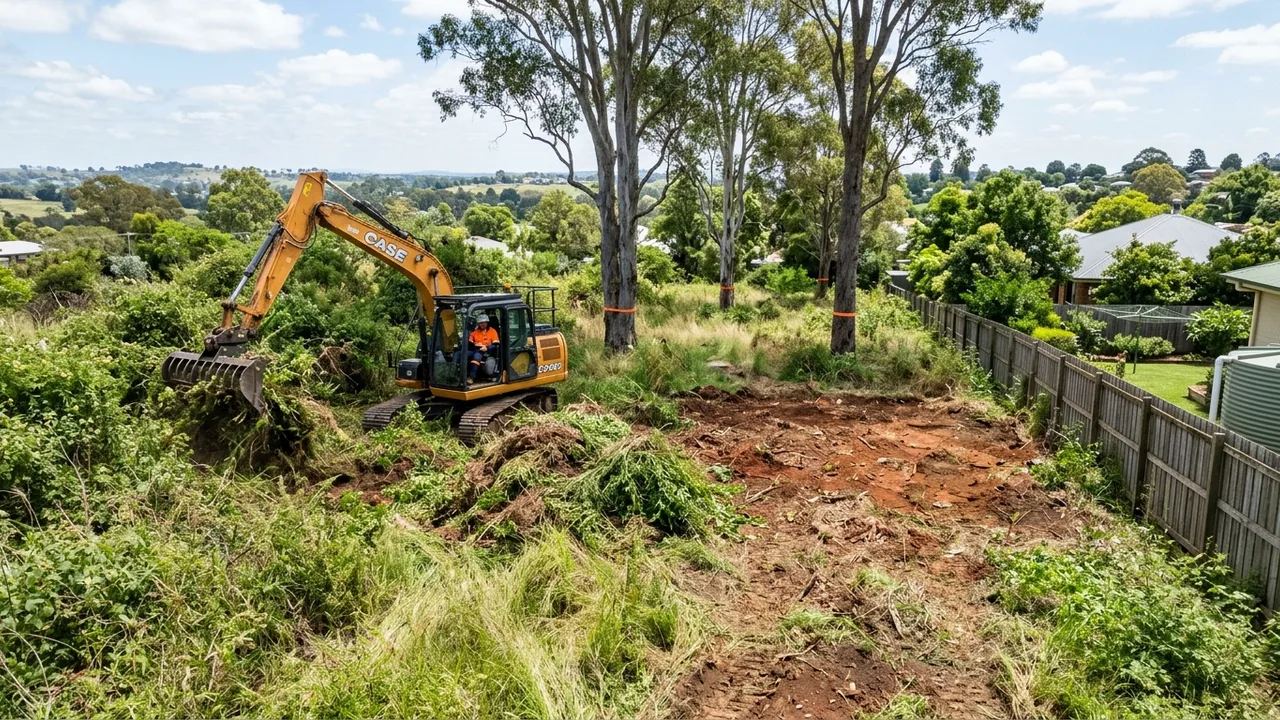
You can keep the big shade trees and still have the undergrowth gone. The contractor marks each tree to retain before work begins, then keeps machines and falling timber away from the trunks and root zones.
Selective clearing takes more care than flattening everything, because the operator works around the trees. The reward is a block that still has shade and a windbreak once the house goes up.
Clearing near the house slab: pad, drainage and access
Clearing for a house slab goes deeper than cutting scrub. Roots and stumps under the pad leave soft spots as they rot, so they need to come out before the builder levels and compacts the ground.
Drainage and water flow matter just as much. When vegetation comes off, rain runs differently across the block. Water can pool against the pad or wash soil down a slope. A sensible clearing plan keeps natural fall lines in mind and leaves any gullies or low spots for the builder and engineer to deal with.
Access is the third piece. Concrete trucks, delivery rigs and the excavator all need a firm route in. Narrow gates, overhead branches and soft ground can change the machinery used, and a smaller machine usually means slower going on the same job.
Green waste and debris removal: what happens to it
Brush and timber can be mulched on site, kept for firewood or fencing, or carted away, and each choice changes the price.
Mulching suits owners who want ground cover for garden beds or erosion control. Carting away suits a tight pad where mulch would only get in the way. Stumps are either ground down in place or pulled out and removed, and each leaves different ground behind.
A clear quote says which option applies to branches, trunks, stumps and rubbish found in the scrub, so you do not end up with heaps along the boundary.
Do you need approval to clear this land?
Not every block can be cleared freely. Some land carries limits that take it outside the Queensland clearing exemptions. Examples are conditions on a development approval, a covenant on the title, an offset area, a declared area, or earlier unlawful clearing on the property.
That means the land's own paperwork and property mapping matter before a chainsaw starts. If your block has any of those limits, the right approval has to be in place first. Council rules can apply alongside state ones, so a call to your local council before the walk-through is worth making.
Sorting it at the start keeps a job from stalling halfway, with a machine on site and a builder waiting on the pad.
Land clearing in Toowoomba and the Darling Downs: slopes and soft ground
Every block is judged by its own fall, its own soft patches and the width of its own gate, and those decide which machine can work. A steep or soft block can rule out a heavy machine that a flat, firm one takes easily.
Where the soil is clay, it holds water and turns slick after rain, so a loaded machine can cut ruts or bog and the work may wait for the ground to firm up. Bare ground on a fall also sheds rain fast. Where a cleared area runs downhill, a strip of mulch or groundcover below it helps hold the soil.
Say how the block falls, how wide the gate is, where it stays boggy, which trees you want kept and where the pad goes, and a local clearing contractor can price the job from there.
How it works
-
Walk the block
The contractor looks at the slope, the soft patches, the access and the trees, then marks what stays.
-
Agree the price in writing
You get a written price for the agreed area before any machine arrives, with the stump treatment set out in it.
-
Clear the scrub and pull the stumps
Trees and scrub come down, then stumps and roots are lifted from the footprint and access strip.
-
Deal with the waste
Brush and timber are cleared off the work area as the waste plan says, so nothing is left heaped on the pad.
-
Hand the ground over
The block is left ready for the builder, the surveyor or the fencer.
Scope in detail
- House pad and footprint The builder needs the slab area clear of roots, stumps and loose timber before levelling starts.
- Driveway and access strip Machines and delivery trucks need a clear way in, and so does your future driveway.
- Yard areas for lawn and fencing Old stumps and buried roots stop fence posts, turf and garden beds going in straight.
- Grass and scrub cut back from the house and sheds Cutting back grass and scrub near buildings lowers the fuel a grass fire can feed on.
- Trees you want to keep Shade and windbreak trees are marked first so the machine works around them.
Residential block clearing options
- House pad clearing Vegetation, stumps and debris taken off the agreed footprint so the site is ready for levelling and the slab.
- Stump removal and grinding Old stumps pulled or ground down so lawns, fences and driveways can go where you want them.
- Regrowth and lantana clearing Dense weedy growth cut and cleared from paddocks and back corners, with the roots dealt with so it is less likely to return fast.
- Green waste handling Mulch kept on site for garden beds, firewood stacked for you, or everything carted off.
Residential block clearing across Toowoomba
Frequently Asked Questions
How long does it take to clear a single house lot?
How long does it take to clear a half-acre lot?
What challenges come up when clearing a house block?
Get it priced
Overgrown block holding up your build? Tell us about the land and get the clearing moving.
Share the details and we will help you take the next step with confidence.