
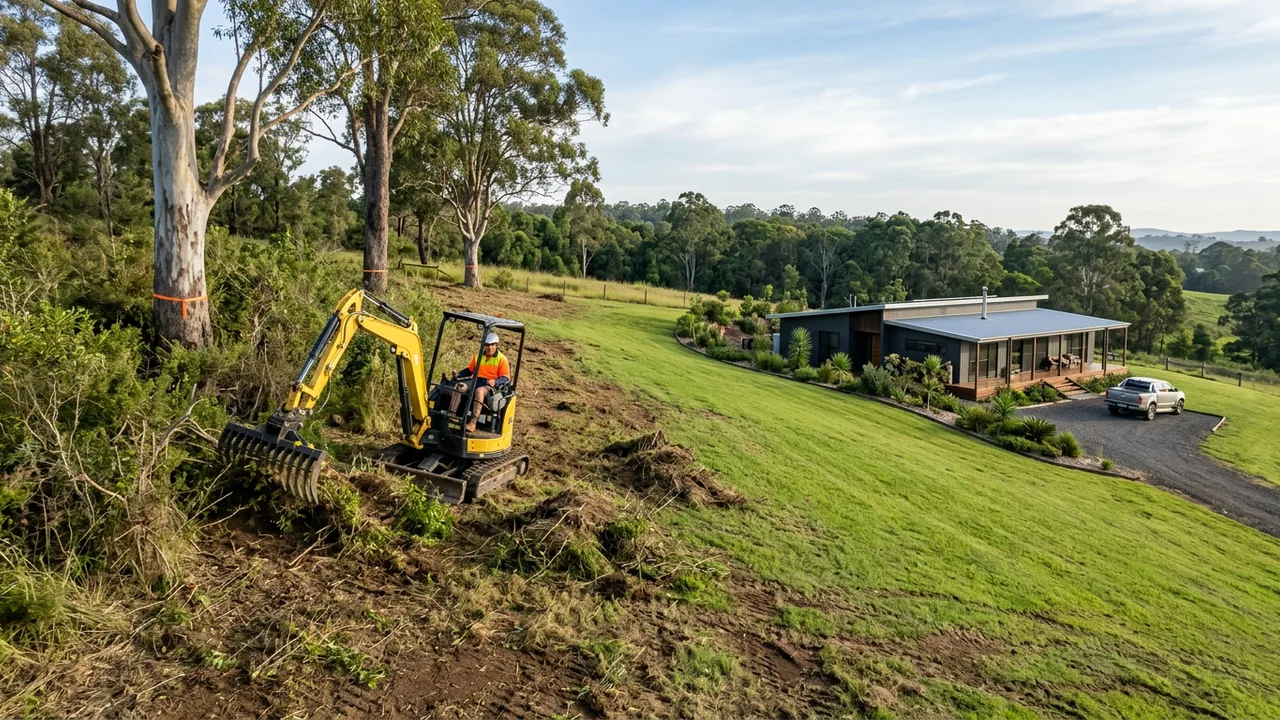
Land Clearing in Glenvale, Toowoomba
A block full of scrub, regrowth or old stumps can stall the builder before a single slab is poured. Clearing gets the lot ready for the builder and keeps the trees you want.
Land clearing in Glenvale means taking a rough block and making it ready for the next stage, usually a house pad, a driveway, a fence line or a safer fire margin around the sheds. A qualified contractor walks the lot, works out what comes out and what stays, and puts the scope and price in writing before a machine arrives. The size of the block, how the ground falls, what stands on it now and which trees you want kept are what shape that scope.
Land clearing in Glenvale: house pads, scrub and stumps
Glenvale jobs fall into three types, and which one you need depends on where the block sits. On the new estate lots, it is usually pad clearing: a tidy house, shed or driveway footprint opened up so the builder and earthmoving crew can get in. On the older western holdings, it is more often paddock clearing, which removes lantana, regrowth and old paddock trees from a back section. Stump removal deals with what is left once the trees are down, so a lawn, fence or slab can go where they stood.
The difference between these jobs is mostly scope. A house pad is a defined area with clear edges. A paddock can run to the fence line and needs more machine time and more thought about where the waste goes.
An independent clearing contractor looks at the vegetation, the fall of the ground and the way in for machinery, then recommends the smallest job that gets you to the next stage. The quote should say what area is covered, how stumps are treated and what is left out.
How a house pad gets cleared before the builder starts
A builder needs more than bare ground. The pad has to be free of roots, stumps and loose timber, because anything buried under a slab can rot or settle and cause trouble later. Clearing normally goes a little beyond the footprint itself so trades have room to work and deliveries can reach the site.
On a Glenvale estate lot, the pad is often a tidy rectangle with a clear boundary, which keeps the job predictable. On a larger holding, the contractor usually marks out the pad, the driveway line and any tree protection areas first, then clears in that order.
If the builder is already booked, say so when you enquire. A contractor can plan the clearing around the date the site needs to be ready.
Can the shade trees stay while the undergrowth goes?
Yes, selective clearing is a normal part of the job. The contractor removes lantana, weeds, small regrowth and dead timber while leaving the mature trees you want for shade or shelter from the wind.
What protects a tree is how close the machine works to it. Roots spread well past the trunk, and driving over them or cutting into them can damage a tree that looks untouched. Marking the trees to keep before work starts, and agreeing a protection zone around each trunk, is how a good contractor avoids that.
Tell the contractor which trees matter to you, and point out any that lean toward the house or shed. Those are worth a closer look before anything is decided.
What happens to the green waste and stumps?
Green waste is the brush, branches and timber that come off the block. It can be mulched on site and spread back over bare ground, kept for firewood or garden use, or carted away. Mulching on site is usually the cheaper route, while carting it away adds disposal costs.
Stumps are ground out below the surface or pulled, depending on what goes there next. A stump under a future lawn needs different treatment from one in a back corner that nobody will touch.
Mulch left on a steep section can wash downhill in heavy rain, and thick piles near the house add fuel in fire season. A sensible plan spreads it thinly or removes it.
Why the way in sets the price on a Darling Downs block
In Glenvale the access changes from lot to lot. A new estate block often has tight side access beside a neighbour's fence, which limits the machine to a compact unit. A larger western holding usually has a gate and a farm-style track, so a bigger machine can drive straight in.
Wet ground cuts up quickly under tracks. A contractor who knows the Darling Downs plans around recent rain and may start on firmer sections first.
The way in decides the machine, and the machine decides the price, often more than the size of the block.
What Glenvale blocks are like to clear
Glenvale sits on the western edge of Toowoomba, where older suburban streets give way to new estates, very large residential holdings and leftover semi-rural land. A fresh estate lot may need only a tidy pad, while a larger holding can carry years of regrowth and old paddock trees.
This was farming and grazing country long before it was suburbia, and new estates have steadily replaced former farmland. On old paddock land, fence wire and buried debris often only show up once the contractor is working through the block.
From the streets near Glenvale State School and Nash Drive Park to the holdings around the Toowoomba Showgrounds, the machine, the waste plan and the trees that stay all depend on the lot in front of you.
Services in Glenvale
- Tree clearing and removal Unwanted trees felled and removed from blocks, acreage and backyards, with the timber and stumps dealt with.
- Site preparation for building Trees, scrub and stumps cleared from the house pad, shed site and access track before the builder starts.
- Selective clearing Undergrowth and chosen trees taken out while the established shade and windbreak trees stay standing.
- Forestry mulching Lantana, scrub and small trees shredded into mulch where they stand, with no burn piles left behind.
- Stump grinding and removal Stump wood ground below the surface or roots removed so lawn, garden beds or a fence line can go in.
- Rural and farm land clearing Regrowth, timber and stumps cleared from agreed paddock acreage, firebreak strips and fence lines.
- Residential block clearing Trees, scrub, stumps and green waste cleared from house blocks and yards, with shade trees kept standing.
Frequently Asked Questions
Who needs approval before clearing a Glenvale block?
Get it priced
Overgrown block holding up your build? Tell us about the land and get the clearing moving.
Share the details and we will help you take the next step with confidence.