
Selective Land Clearing in Toowoomba
Lantana has taken the back paddock, but the gums near the house are worth keeping. Selective clearing lets you get rid of one without losing the other.
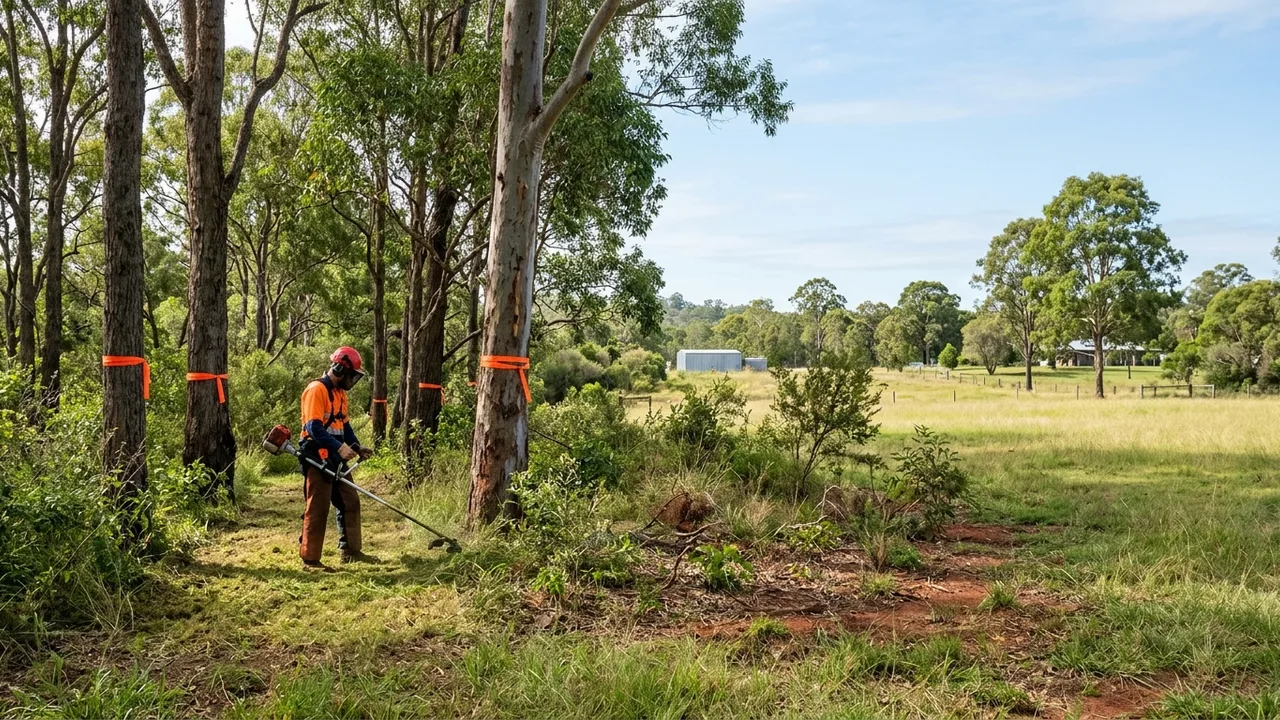
Selective land clearing in Toowoomba takes out the lantana, scrub and regrowth, plus any trees you choose, while the shade and windbreak trees stay put. It suits a block that has gone wild but still has trees worth keeping. The result is usable ground without a bare, exposed paddock.
Selective land clearing in Toowoomba: keeping the shade, removing the scrub
Selective clearing is the right fit when part of your block is worth keeping. Maybe the back paddock has gone to lantana, but the old gums near the house give shade in summer and break the wind. A full strip would take all of that away.
The work is slower and more careful than flattening a block, because the operator has to read the ground and work around trees. It also keeps the topsoil covered, which a block stripped bare cannot do.
Working near the trees you want to keep
The main risk to a keeper tree is not the chainsaw. It is the machine. Tracks, buckets and dragged logs scar trunks and crush the roots that sit just under the surface, and a tree can look fine for months before it declines.
Good contractors flag every tree you are keeping before a machine comes through the gate. They agree a protection zone around the trunk and roots, and they keep heavy machinery out of it. Trees that lean over the work area may be trimmed rather than removed.
Think about where the afternoon shade falls and where the wind comes from. Your reasons help the contractor judge which trees are worth the extra effort.
Clearing across the Darling Downs and Toowoomba suburbs
A sloping block in Mount Lofty and a flat paddock further out on the Darling Downs call for different machines. On the slope, a smaller tracked machine is safer than a heavy one, and cut brush is better mulched where it lies than dragged downhill past the trees you are keeping.
On flatter ground, heavy soils can turn sticky after rain, so the operator may wait for the paddock to firm up. Driving on wet ground leaves ruts that hold water and squashes tree roots.
On a tight block in East or South Toowoomba, the gate and the neighbours' fences often set the limits. A narrow gate limits machine size, which can mean more hand work.
Do vegetation clearing rules apply to your block?
They might. Clearing regulated vegetation that is not exempt generally needs development approval, or it has to follow an accepted vegetation-clearing code. Some clearing is exempt, so the answer depends on the land. This reflects Queensland Government guidance as at October 2026.
The state vegetation map for your lot shows what is regulated. Toowoomba Regional Council's local laws can also protect trees the state rules do not cover, so a call to council is worth making.
What drives the price of selective clearing
Selective clearing is priced on the work, so a written quote makes sense before anything starts. The main drivers are how thick the scrub is, how many trees come out, how many stumps are involved and how hard the ground is to work.
Steep or hard-to-reach ground pushes the price up because it slows the job or calls for smaller machines. Working around retained trees also takes more time than open clearing.
Waste handling matters too. Mulching on site is usually cheaper than carting a large volume away.
What happens to the green waste and stumps
The brush and timber need a plan before work begins. Many owners have it mulched on site and spread back over the ground, which suppresses weeds and keeps the soil covered. Others keep the firewood or have everything taken away.
Grinding a stump leaves the roots to rot down in the ground, which is fine for a lawn. If a garden bed or young tree will go where a stump stood, it should be ground deeper. Pulling a stump out leaves a bigger hole to backfill, but it clears the way for footings, a fence post or a driveway.
For firebreaks, mulch should not sit in a thick heap beside the shed or house, because that creates the fuel you were trying to remove.
Lantana to clear and gums to keep? Tell us which trees stay, how the block falls and how wide the gate is, then request a clearing quote.
How it works
-
Walk the block and mark the keepers
The contractor looks over the land with you and flags the trees to stay. Protection zones are set around their trunks and roots.
-
Get the scope and price in writing
The quote sets out the work area, stump treatment, waste handling and exclusions, so the price is clear up front.
-
Check the land against the vegetation rules
Current property mapping shows whether the vegetation is regulated. If approval or a code notification applies to your land, you and the contractor settle who lodges it, and work waits until it is in place.
-
Clear in stages
Undergrowth and unwanted trees come out first, working away from the keepers. A smaller machine goes in where the keepers stand close together or the gate is tight.
-
Deal with the waste and walk it over
Brush and timber are mulched or removed as agreed, then the finished block is checked against the marked trees.
Scope in detail
- Scrub and lantana Dense scrub holds fuel close to the house and sheds. Lantana regrows from the base, so the cut needs a plan for stumps and roots or the paddock turns green again.
- Chosen trees only Dead, leaning or badly placed trees come out while the keepers are marked and left alone.
- Stumps in the way Old stumps block a lawn, fence line or driveway, so the ones in the way are dealt with and the rest stay.
- Green waste Mulching on site keeps waste costs down and covers bare soil straight away, while carting it off suits a block where heaps would be in the way.
Selective clearing options
- Selective tree and vegetation removal A leaning keeper is often trimmed back over the work area rather than felled, which saves the shade and the cost of taking the whole tree out.
- Scrub and undergrowth clearing Thick grass and young regrowth under the canopy are cut or mulched back, leaving ground ready for lawn, a fence line or a firebreak strip near the shed.
Selective clearing across Toowoomba
Frequently Asked Questions
Can any land clearing contractor do selective work, or do I need someone specific?
What are the common mistakes with selective clearing?
What should I know about selective clearing before building a new home in Toowoomba?
Get it priced
Overgrown block holding up your build? Tell us about the land and get the clearing moving.
Share the details and we will help you take the next step with confidence.